Showing posts with label Geometry. Show all posts

Saturday, April 11, 2015

Five for Fraturday


Hi there! I'm just popping in to share a little about my week... it's Five for Friday time - a little late!

1 - We had a great Easter/Little Guy's Birthday with my parents on Sunday! Little man loved egg hunting, although he didn't understand why they weren't getting refilled with candy every time :) It's so hard to believe he's already three. I am blessed beyond belief!

2 - We've been reading The Westing Game at school, and everyone is hooked! It's such a great mystery, and is pushing my higher readers to really think critically and make lots of inferences as they try to solve the crime. I'm using a great novel study guide from Courtney Schermerhorn, which my class is loving!

3 - We came back from spring break to new laptops that replaced our desktop student computers. I am loving being able to allow my students to work at their seats instead of at the "wall-o-computers" that we had before. Their behavior has even improved... something about not having your back to the teacher...


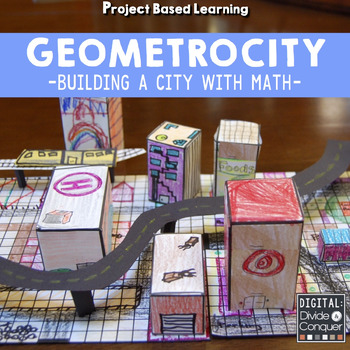
4 - We've been working this week on our Geometrocity projects from Digital Divide & Conquer. My class is working in groups of three to create the best city plan. The "coop-etition" is great, and they are working so hard! I can't wait to see their final products.

5 - When we got our new laptops, I was more than ready to get rid of my bulky computer tables and store the laptops on top of a few bookshelves I already had. The only problem was that the bookshelves are way too cluttered! Here's my easy, at school on my planning period fix. I made these quick bookshelf curtains using some leftover fabric from another classroom project, hot glue, and my flat iron!

Hop over to Doodlebugs Teaching to see what everyone else has been up to this week!

Saturday, May 17, 2014

Loving this Volume Lesson!

I am linking up with The Teacher Studio for her new Loved that Lesson linky to share a lesson I absolutely loved!

This week, I introduced volume with my class, and instead of  "teaching" them what it is and how to find it, I gave them time to explore. I started by giving them a basic definition of what volume is. Then we used a fabulous activity from A New Day of Learning's TPT Store, her Hands-On Math Center on Volume of a Rectangular Prism.

Inside are 26 cards with the dimensions of different rectangular prisms. (Ex: Build a prism that has these measurements: height of 3, width of 6, & length of 4) I gave each student a card and some unifix cubes, and sent them off to build their prism. Some of them had trouble even knowing how to get started (which is just one reason lessons like this are so important!), but with a little coaching, they all got to work building their prisms.
{By the way, it was "Outside Day" on our A to Z Countdown to Summer, so that's why we did this lesson outside...it was fun to get out of the classroom for a while!}

Once their prism is built, they are to determine the volume of the shape, initially, by counting the cubes used to build it. They recorded their answers on an answer sheet., so I could check them later, and switched in their card for a different one. Since there are 26 in all, there were enough for each student to work independently and get plenty of practice.

Before our 50 minute lesson was over, I had three students approach me and say "Mrs. Doyle,  I found a way to get the volume without building the shapes and counting them." They had all figured out that if they multiplied the three measurements, they could find the volume of the shape! Score one for the teacher!

We then had some great math conversations about how and why the formula works. I reminded these little smarties that they needed to check a few more shapes to be sure this will *always* work, which they did. Then they started secretly multiplying instead of building the shapes, and trying so hard not to let their friends know what they are doing.

Word leaked out that there's a "secret" way to get the answers faster, and everyone started looking closely at the numbers to try and figure it out. I decided to work on this lesson for three days, not telling the "secret" until the very last day. I ended up only having to teach the formula to a couple of students. Letting them construct the knowledge themselves means they will (hopefully) really understand this concept and why the formula works!

Things I heard kids saying during/at the end of this lesson that made me so proud:
"I think I found the secret, but I just want to check one more."
"This is so cool!"
"What about the cubes in the middle {of the prisms, the ones that aren't visible}...oh wait, if you multiply, it's counting all of them. Like if there's 12 in one layer, and you have 5 layers, it's 12x5."
and best of all... "Do we have to stop doing math?"

I am so excited to see them learning when I am not "teaching." Sometimes, with all of the content we have to cram in before testing, and the pressure to get it all covered, I think we rush straight past opportunities like this one. Next year, it is my goal to slow down, and give my students time to explore and build knowledge for themselves, rather than spoon-feeding it to them and speeding along through the curriculum.

PS - Check back Monday for a special blog announcement!!! I've been keeping a secret from you guys, and I can't wait to share it!

Tuesday, April 22, 2014

Tried it Tuesday - Exploring Area & Perimeter

This week, we are working on area and perimeter of rectangles and squares. I am trying something new, so I wanted to link up for Holly's Tried-it Tuesday!

This lesson kind of came to me last year in the middle of teaching area and perimeter, so I made one of those last minute changes to the lesson plan that we are all so familiar with. It went well, but I knew if I really planned with this idea in mind, it would be much better. So this year, when we got there, I made an actual lesson plan around the spur-of-the-moment idea I had last year. I am super excited about how well this lesson went, so I wanted to share it with you!

We always seem to struggle with the difference between area and perimeter and when to use units vs. square units for measuring. Since our floor is covered in handy-dandy 12x12 tiles, I used them to show life-sized examples of these concepts. I started by taping off 3 different sized rectangles and 2 squares on the floor, spaced apart so there's plenty of room for students to work in small groups. Before we started, we did a quick review of what area and perimeter were. I had at least a few students who already knew the definitions, but no one remembered how to find them. (Which was *perfect* because I wanted to start from scratch here!)

Students worked in groups of 3-4, rotating through the 5 shapes. First, I asked them to figure out the perimeter of their shape. Most of them did this pretty easily by counting the edges of the tiles around the shape. Then, I asked them to write an equation to show the perimeter. Most of them figured out immediately to add up the four sides. The only groups who had trouble were the two with squares, so I worked with them until they had it.

Then I asked them to find the area, which they again did by counting the tiles in the middle of the shape - exactly as I expected. Then, we worked together to figure out that they could multiply the length x width to get the area. There were a few skeptics in the room who wouldn't believe it always worked until they tried all of the shapes. I loved it!

I had a "Challenge" shape taped off too, but we ran out of time, so we will be working on it tomorrow. Hopefully, we will be able to figure out how to find the area of this shape on their own with the knowledge we have built today!

I whipped up a quick answer sheet for students to show their thinking as they traveled to the different shapes. You can grab a free copy by clicking the photo below!

That's it for today. How do you teach area and perimeter?